
Ulex europaeus
Common gorse
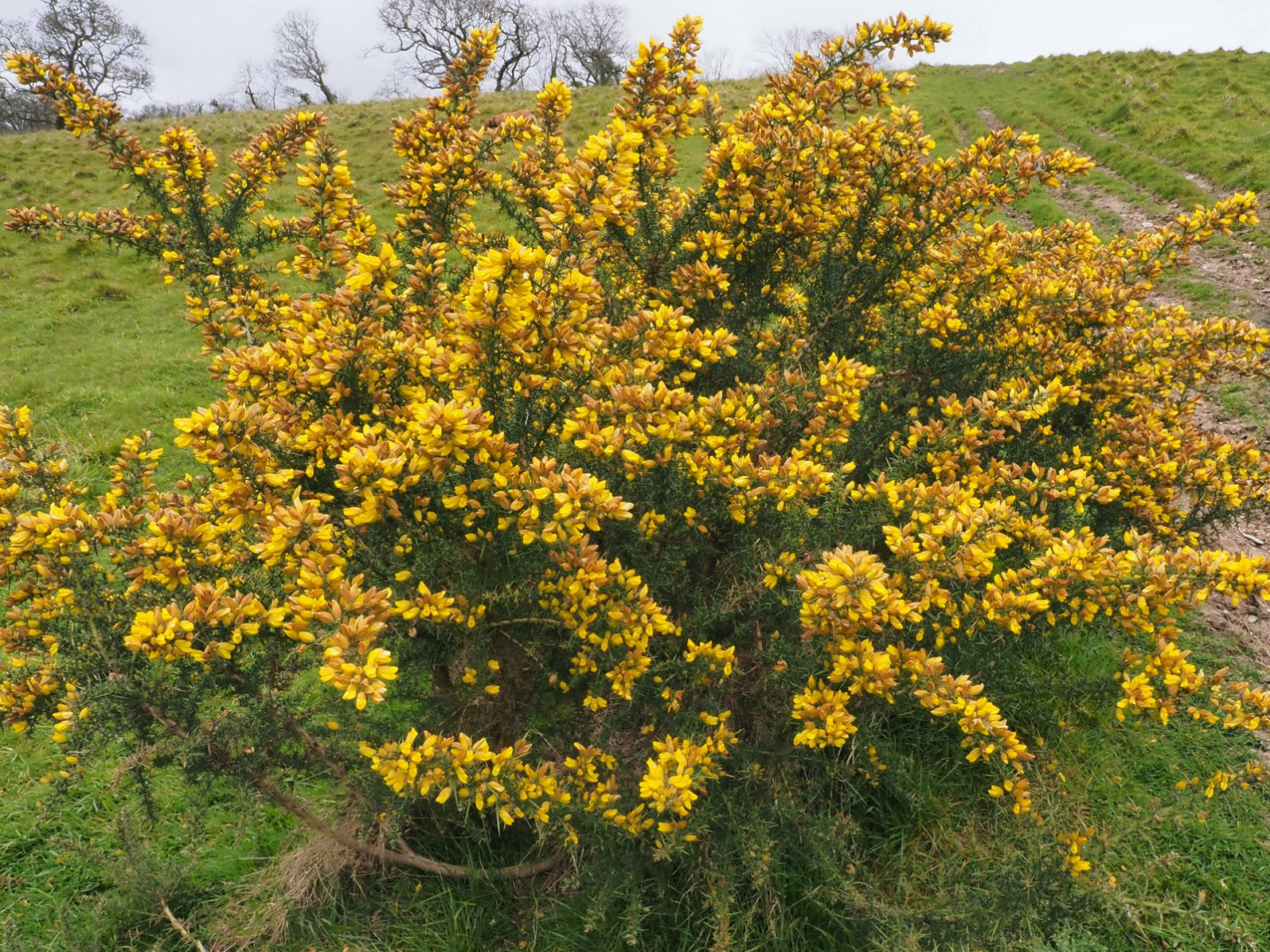
Ulex europaeus
DESCRIPTION
You may well wonder why any nursery could possibly bother growing something so invasive, rampant and self-seeding in our countryside. It does however have its uses or role in the garden in a few key aspects. Those whose gardens edge onto fields with sheep or cattle in them may wall want something inedible to them as a protective hedge when the fencing rots away. Those who simply want to keep unwelcome visitors out of their garden with a nasty prickly plant may think in the same way. Similarly those who are creating new gardens in coastal situations near cliff edges or in extreme exposure on a hill, perhaps in the north of England, may well want a dense evergreen windbreak to filter the wind before it hits and damages more choice plants in its lee. New windbreaks need to contain several layers of protection with gorse as the outer layer.
The double flowered gorse, Ulex flore pleno, perhaps has a place in a very wild garden for its attractive flowers and it can earn its place in a shrub border if clipped hard to keep it under control.
U. europaeus flowers between March and May with further intermittent flowering right through the year. Its pea-flowers are chrome yellow and scented. They make a superb display on a hot dry bank but this is, of course, a densely branched shrub with vicious spines.
HOW TO GROW
SEED
Gorse will self-sow itself onto any bare patch of ground which it will quickly colonise. If a clump gets completely out of control a box of matches can soon solve the problem providing there is nothing else that will get burnt at the same time.
PLANTS
If pot grown plants are planted out (rather than seedlings) they have a tendency to become leggy and, after flowering, a hard pruning taking the plants down to 2-3in in height will ensure a more bushy plant thereafter.
Ideal For Hedges: 2-3m high
Growth Rate: Average | 20-40cm a year
Position: Normal or dry soils, coastal or inland positions, exposed sites in sun or semi-shade
INTERESTING INFORMATION
Before the Industrial Revolution, gorse was valued as a fuel for fires and kilns, as well as baker’s ovens. After crushing the spines (e.g. in cider mills), gorse also made valuable feeding for stock including cattle and horses in wintertime.
Straight stems of gorse make excellent walking-sticks and the flowers can be used to make a Gorse wine. It also makes a convenient anchor for washing, acts as a chimney brush and, when in flower, as a source of colour for Easter eggs. Gorse and heather have been bound together to make besom brooms. Gardeners have been known to lay chopped gorse over emerging peas to deter pigeons and mice.
In order to prevent over-exploitation, there have historically been a wide range of conditions on harvesting, such as in Oxfordshire where people were only allowed as much as they could carry on their backs. In Hertfordshire there were regulations prohibiting cutting outside a certain parish and digging-up entire bushes. In some places even the type and size of cutting implements have been specified.
This page is sponsored by:-

PLANT WORLD SEEDS

PENINSULA PRIMULAS
| More Information | Other Suppliers |
 |  |
| Not available at moment |
Download free QR Code to this page