
Digitalis
Foxglove
FOXGLOVE CULTIVATION AND PROPAGATION
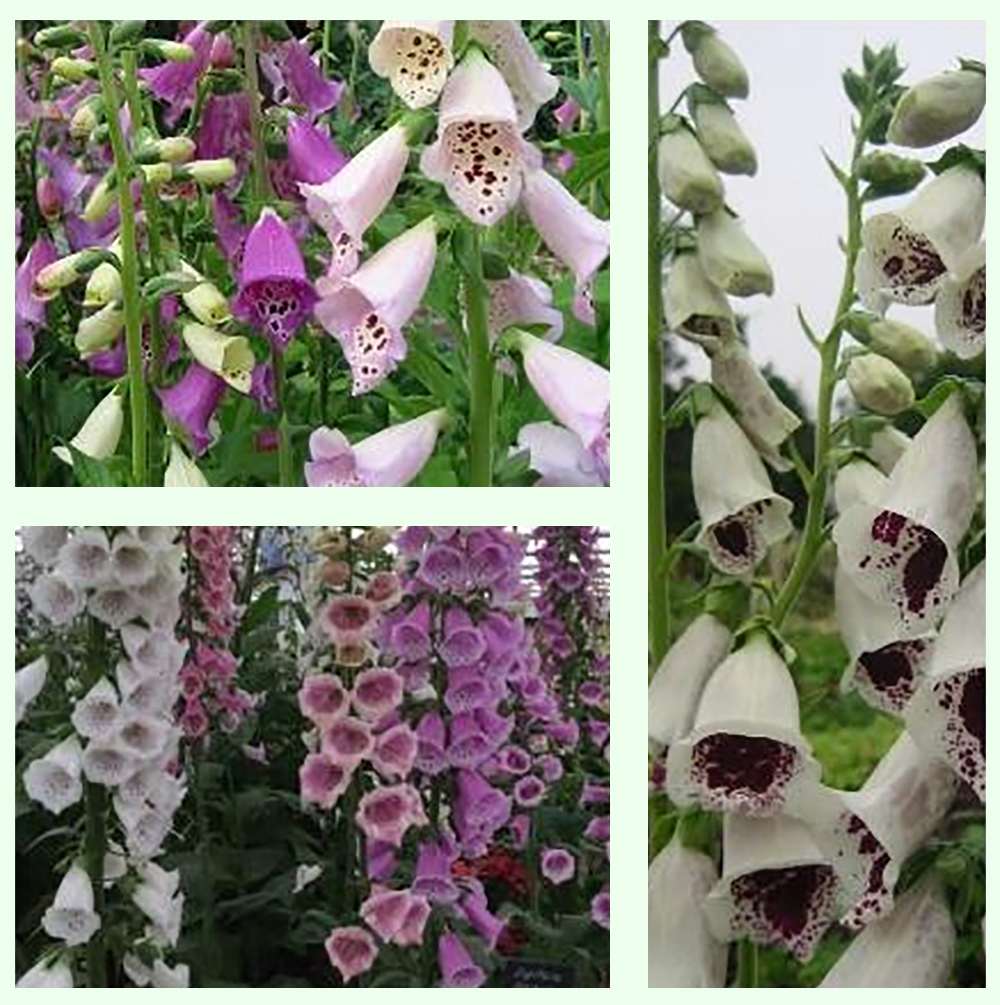
Most Foxgloves prefer a well-drained good garden soil in full sun or part shade. They are trouble fee under good cultivation. Our native Foxglove Digitalis purpurea is the best known. There are 24 species and distinct geographic or varietal forms found throughout Central and Southern Europe and around 40 cultivars.
Foxgloves like overhead shade, or if the soil is not too dry they will be happy in full sun, great even for a clay soil, being shallow rooted they will travel far just below the surface to exploit nutrients in any leaf mold or mulch.
There are a few Foxgloves that need a full sun situation, such as Digitalis Silver Fox and Digitalis Vesuvius, others like the Camelot series will grow well in a sunnier site and can make fabulous displays when grown in pots on the terrace or patio. Many of the smaller growing species prefer a sunnier site as well, such a Digitalis laevigata and lanata.
Digitalis purpurea forms require a period of cold to initiate the flowering so when purchasing small plants at the beginning of spring they may not flower that same year. If flowers are required same summer, plant larger plants in 2 litre or 3 litre pots. The hybrid sorts do not require this so will flower in their first year from seed.
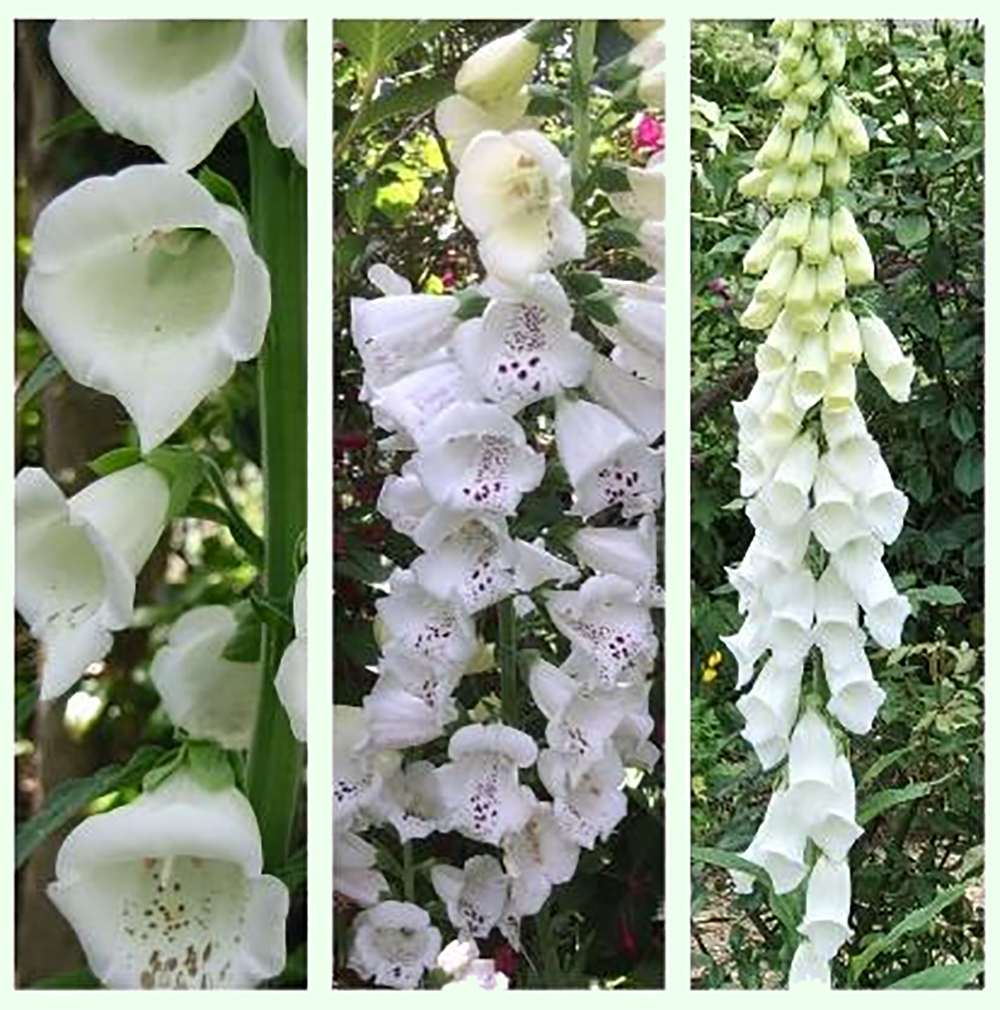
Our native sort Digitalis purpurea, may not come true from seed, as the bees travel from one coloured flower to another, so the seed will not always produce the same colour. If one colour or sort are required plant a range of sizes at the same time. Some will flower in the first year, others may flower a little later that same year and the youngest will flower the following year, when the seed from the original is just foliage waiting to become large enough to flower the year after. A large stock of seed will be released by the plants over a lengthy period of time increasing the chance of the same colour being maintained.
Harvesting some of the seed from your favourite biennial Foxglove is always a good idea, you can expect 80% to come true to the parent. Cut the stem with the seed capsules on and put it somewhere to finish drying, like a shoe box or large paper bag. The seed will fall out as the capsules dry and be ready to pack and label for when you are ready to use. Or left to self-sow on the stems, but don’t mulch over the seed as light is needed for germination. Seed scattering tips can be found on our seed leaflet which also covers sowing Foxgloves from seed
Another way to propagate might be to divide the plants, this is more commonly done with the herbaceous species like Digitalis x mertonensis, they respond admirably if split in spring, reduce foliage by half and replant the rooted sections firmly. Herbaceous perennial species such as D. lutea and D. grandiflora can also be divided. But as these sorts come true to seed, then that method will produce a higher number of plants.
Got a Foxglove in the wrong place in your border? Even well-established or coming into flower they can be moved. Select a dull day, have the new planting area well prepared, then dig a large circumference around the plant as they are shallow rooted, move as much of the root and surrounding compost to the new area. Once re planted a gentle water, and, if there is any flower stem developing it is sensible to give that a cane to support it whilst the roots get on with settling back in. Keep an eye on your newly moved plant it will need some tender loving care … but don’t overwater it.
Foxgloves are a great group of plants, diverse in both their foliage and flower, their requirements and habits. There is a Foxglove for every type of garden so give them a try.
This page is sponsored by:-

THE BOTANIC NURSERY
| More Information | Other Suppliers |
 |  |
Download free QR Code to this page