
WARWICKSHIRE
CONTACT DETAILS
| Telephone 01789 842072 charlecotemill@live.co.uk |
CLICK FOR INFORMATION
 |  |
 | |
 |
INFORMATION ONLY
 |  |
 |
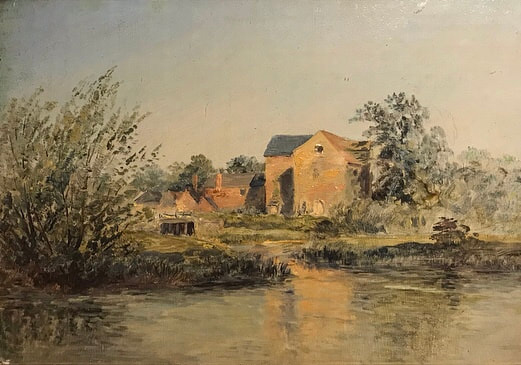
“The Mill at Hampton Lucy”
This painting of Charlecote Mill from the west side and looking across the mill pool was painted in the late 1800’s by Fred William Newton Whitehead (1853-1938).
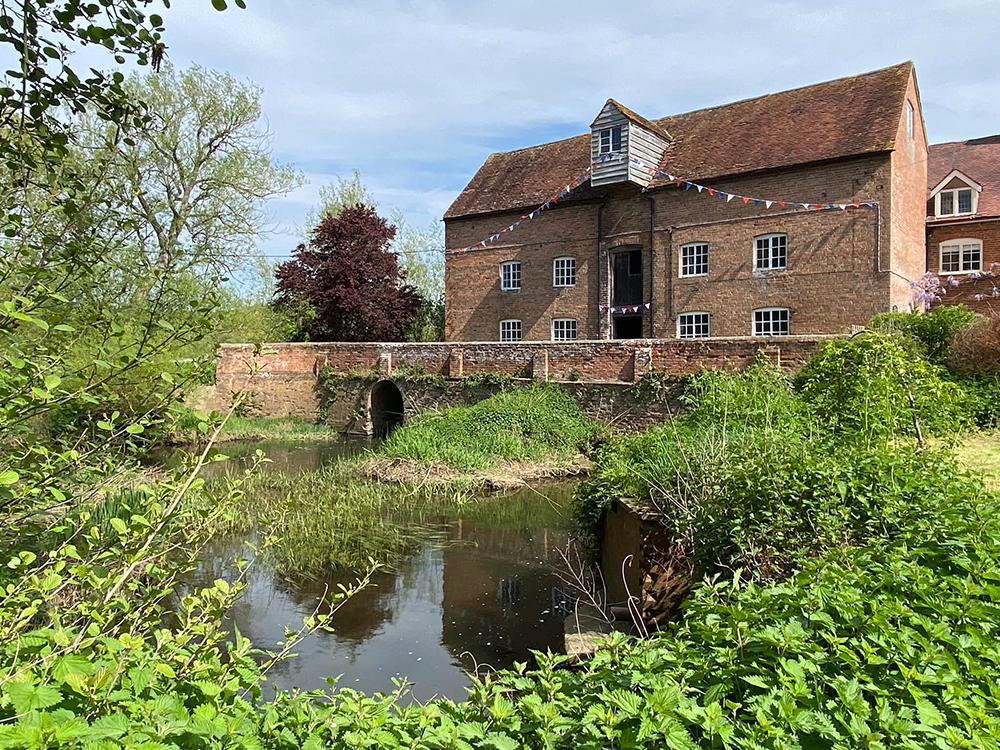
A Brief History of Charlecote Mill
With acknowledgement to Tim Booth and John Bedington
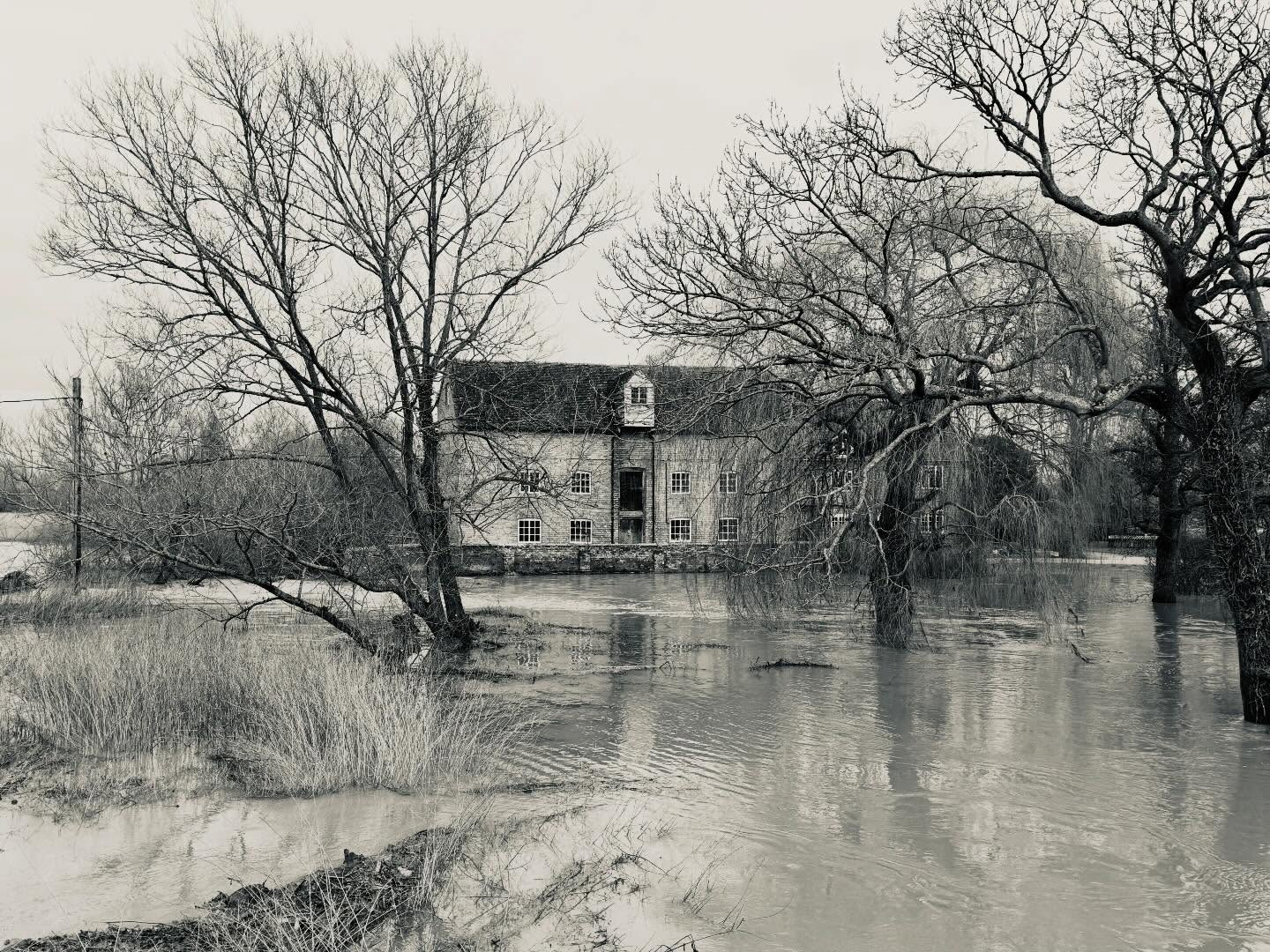
The mill as you see it today was probably built in the eighteenth century, but on the site of an earlier mill. A mill at Hampton Lucy is even mentioned in the Doomsday Book (compiled 1086). It was then valued at 6s.8d.
Little is known of the mills and their millers over the years, but a noticeable incident occurred in 1675 when the miller John Dickens and three other men were indicted for ‘the felonious stealing and carrying of two perches and two pikes of the value of 11d, of the goods and chattels of Richard Lucy Esq.’ Dickens and Robert Nason confessed, and were sentenced to be ‘stripped from the waist downwards and openly whipped through the town of Hampton Lucy till their bodies be bloody’.
The present mill building and mill house were evidently built by the Lucy estate, and are still owned by Sir Edmund Fairfax Lucy. The present mill, apparently built in 1752, is a particularly fine building, with walls eighteen inches thick. The names of the millers in the nineteenth and early twentieth century can be ascertained from trade directories, etc.
The name of one, William Witherington, who was miller from 1845 to 1864, can be seen carved in the brickwork on the top floor. The last millers were Newbery and Son, from 1936 to the 1950’s; however, they used mostly an engine-driven hammer mill, and from the time of the Second World War, the only equipment driven by waterpower was the sack hoist.
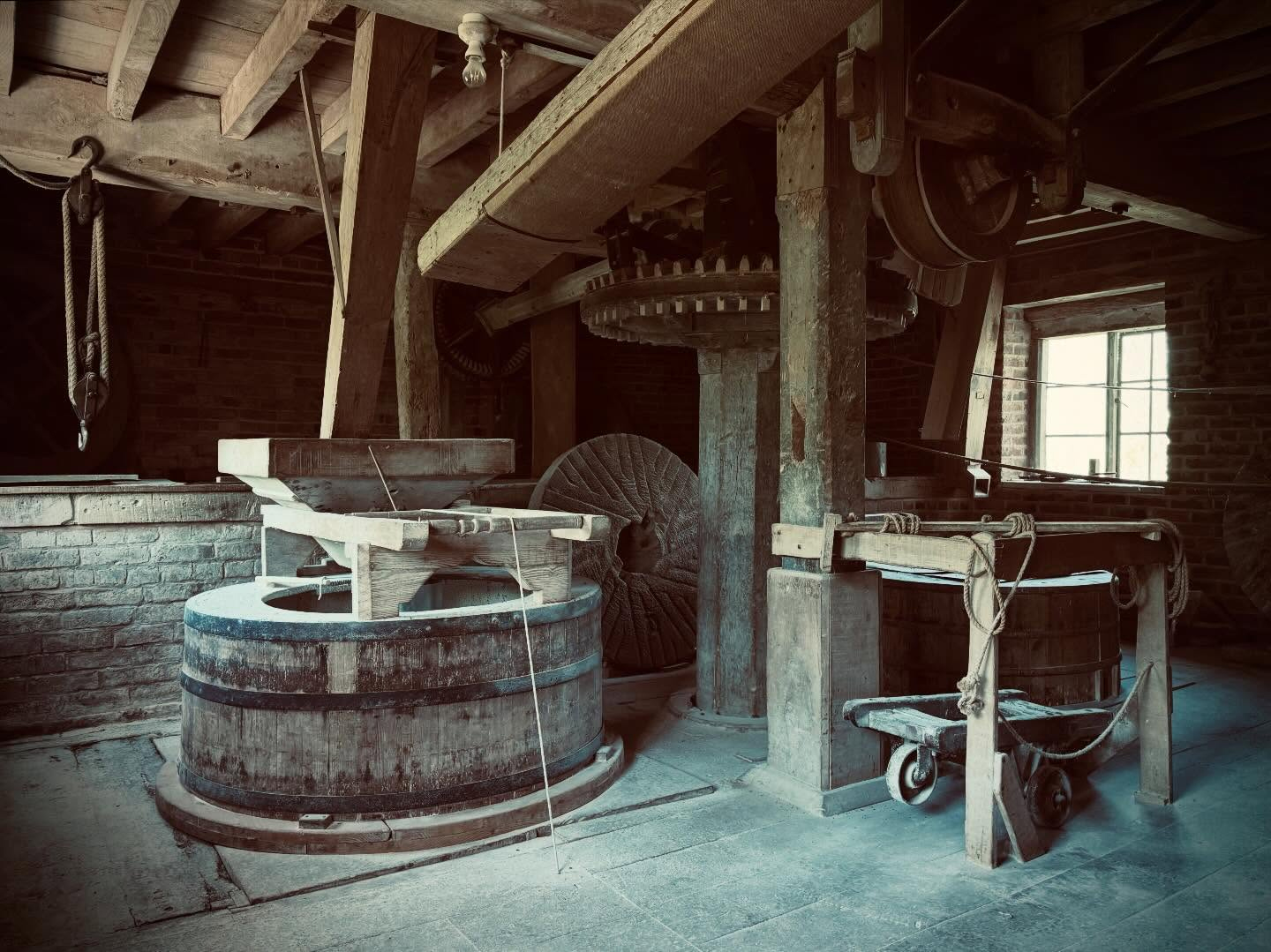
From 1978, John Bedington had a lease over the mill and he and Tom Mitchell, aided by a band of helpers too numerous to mention, have done extensive repairs to the roof, windows, floor, stairs and doors, gears, stones, sack hoist and bins and the East water wheel. The West water wheel was repaired in 1978 by the Birmingham millwright Bob Atkins at the expense of the BBC for their film of ‘The Mill on the Floss’.
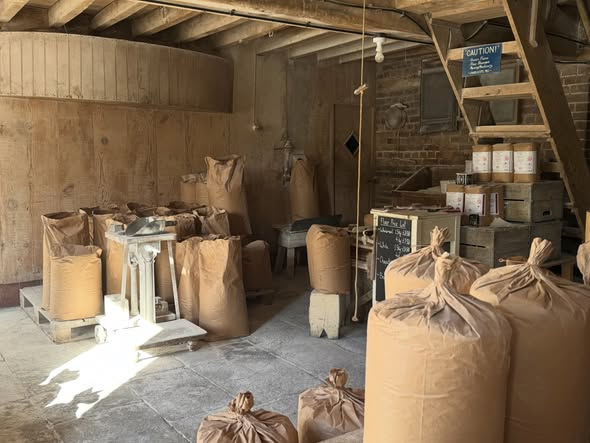
We proudly produce our flour using only local wheat grown on three farms that lie within a three mile radius of the mill.
At Charlecote Mill, we care about the environment and we care about how far our food travels. We also believe in supporting local farms wherever possible hence why we source our wheat locally. All the farmers we work with have supplied the mill for over 40 years and grow the wheat using some of the most ethical means possible. If you could stand on the roof of the mill (not recommended) you would be able to see every field where our grain is grown.
It has been suggested that many farms in the UK use Glyphosphate (Roundup) prior to harvesting their crops, but our farms do not believe in this practice and harvest naturally.
The wheat is stored for the mill on the farms where it is grown and is delivered direct to the mill on tractor and trailer, about 10 tonnes at a time, where it is then “blown” into the grain store at the top of the mill. This is the only concession to modern methods used in the mill, but cuts delivery time from 3 days (using horse and cart and the external sack hoist) to about 3 hours!
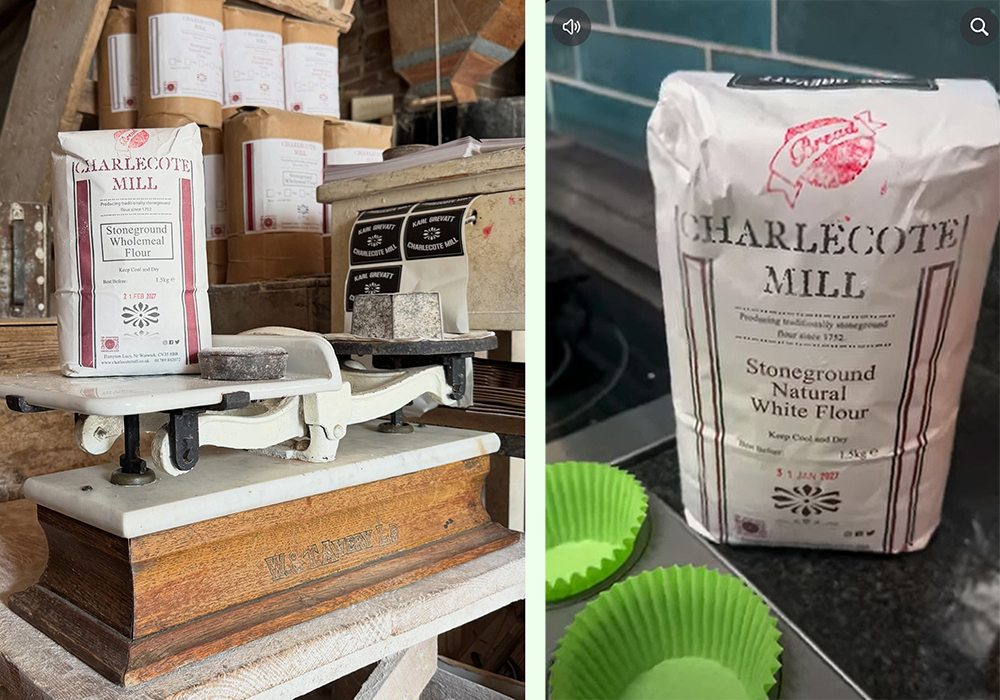
We are members of the Traditional Cornmillers Association