Campanula rotundifolia
Harebell
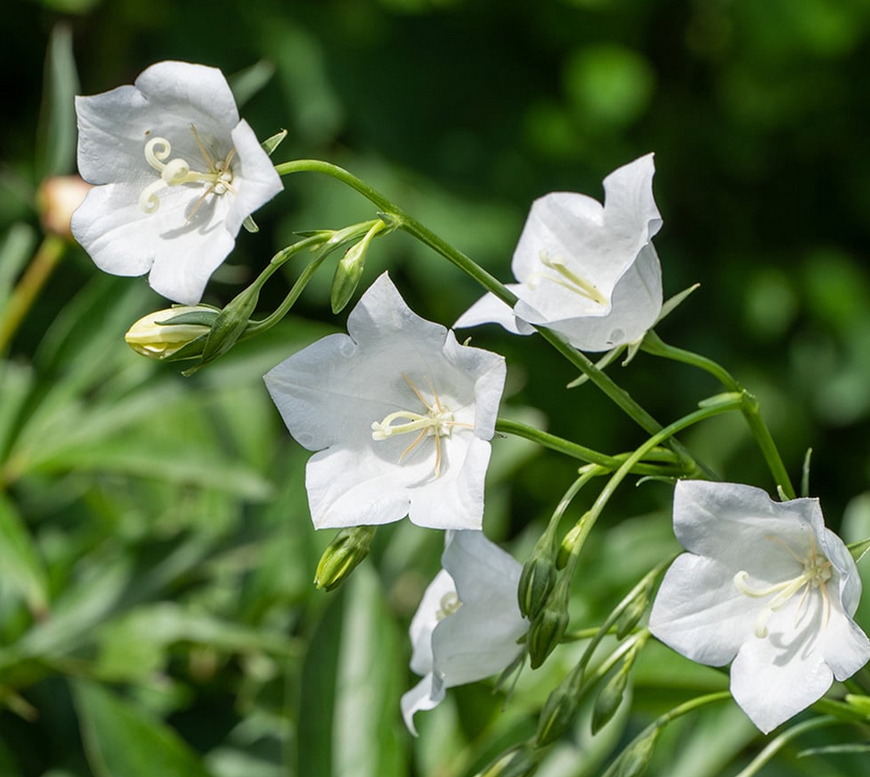
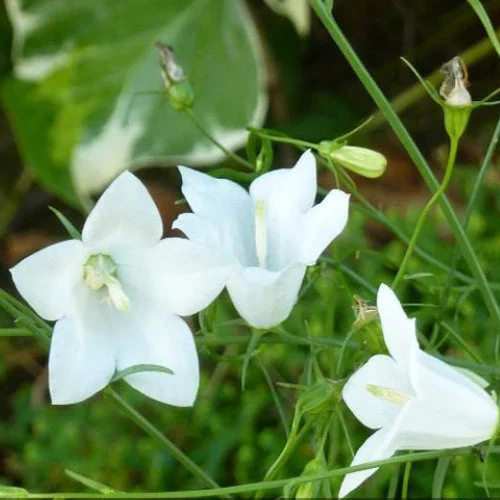
Campanula rotundifolia alba *White Gem*
Description
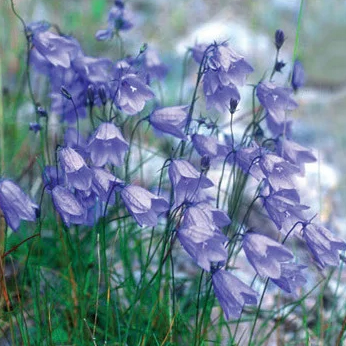
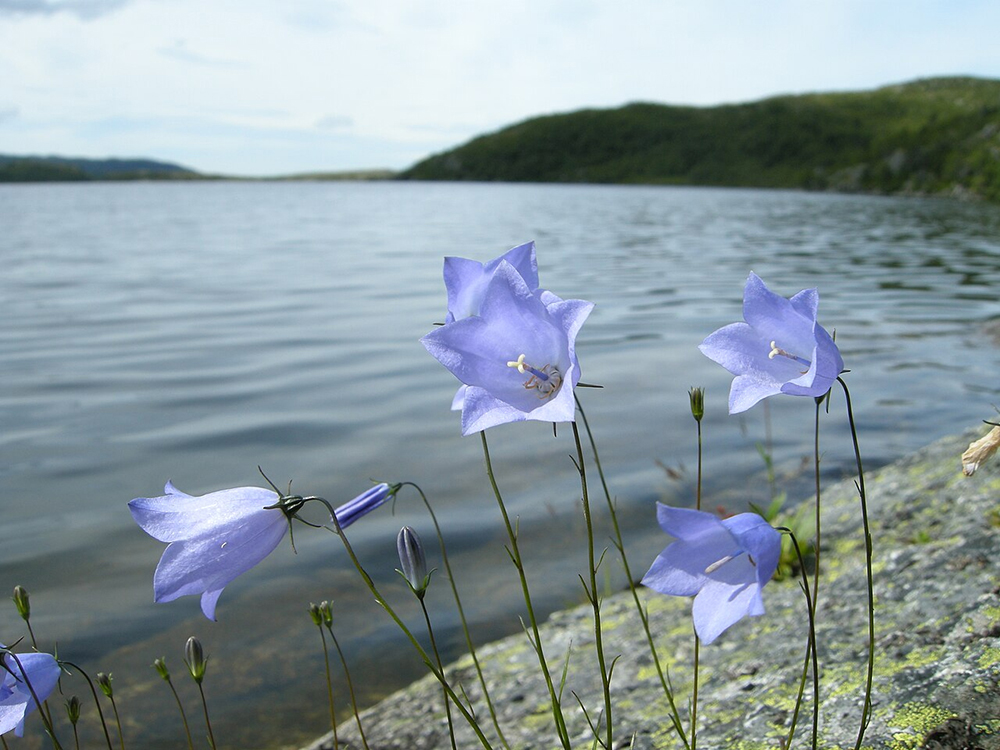
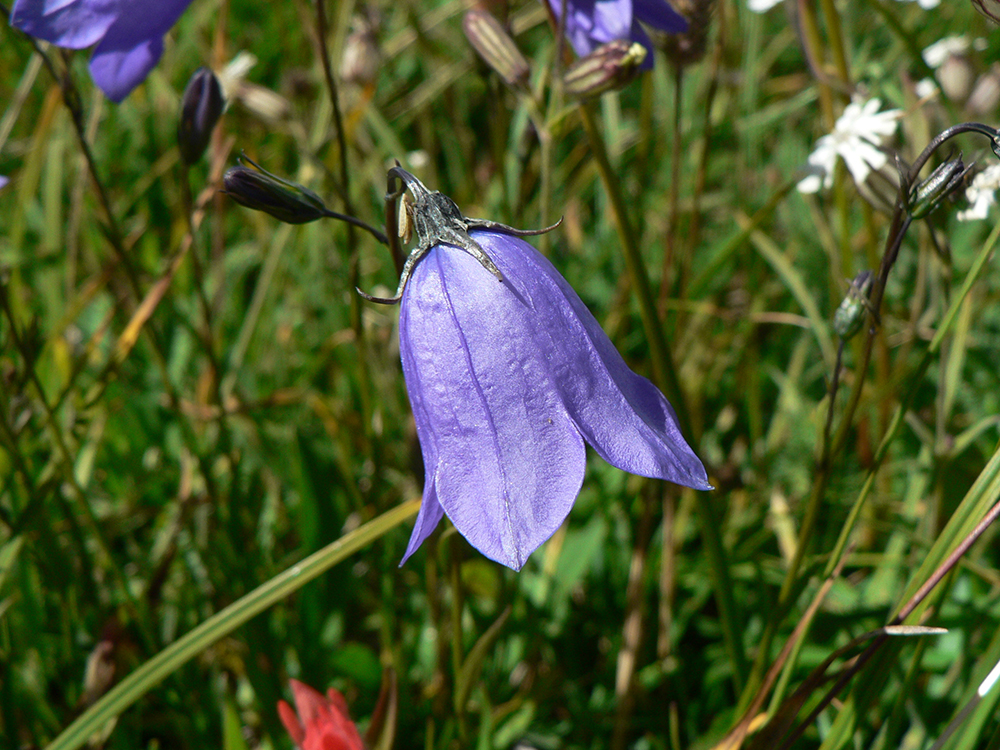
The true wild “Harebell” or “Bluebell-of-Scotland” is a too-rarely grown little gem. Long-flowering and easy to please in any position, it produces masses of dangling blue bells on long thin stems over an extended mid-summer period. Hanging blue bells on slender stalks. Grows 15-40cm tall. Roundish leaves at base, very narrow linear leaves up thin stem. Small, bell-shaped flowers in shades of blue or purple, which hang in clusters on slender stems. A white variety, Campanula rotundifolia ‘White Gem’, also exists.
Germination Instructions
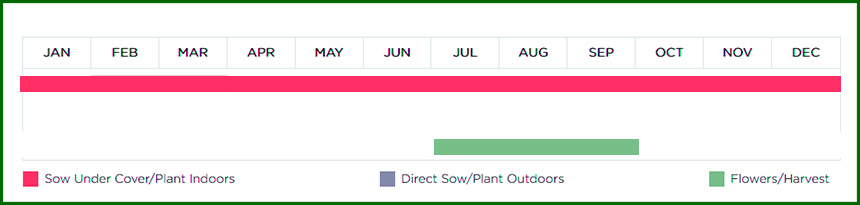
Sow immediately at any time onto preferably a soil-based compost, covering with fine grit to approximately their own depth. Germination MAY be quicker if kept at 15 to 20 degrees C. but many seeds WILL NOT come up the year they are sown, needing winter chilling after sowing, and ONLY come up with natural spring germination.
Growing Instructions
Dry, grassy places. From mountain tops to sand dunes. Quite catholic in its choice of habitats: as happy on chalk grasslands as on acid heaths, and under tall bracken as on exposed cliff tops. However, damp is one condition that harebells cannot tolerate. It is distributed across the British Isles but not in the Channel Isles and most of south and east Ireland. Common name Harebell, a native perennial wildflower in the UK with delicate blue, bell-shaped flowers. It thrives in dry, undisturbed, and sunny locations like grasslands, heaths, and sand dunes.
When to Sow