
Why buy products Grown in the UK
Over Christmas I read the much vaunted report “Farming Profitability Review” by Minette Batters which I can assure you was not very light reading.
My first impression is alphabet soup which is probably normal from a Baroness appointed by the Government and former head of the National Farmers Union, with connections to most of the establishment organisations she mentions.
When I read further and i will point out at this stage that I do not normally read documents like this but having been in Horticulture with a passion for the UK and the Countryside for 65 years I think I am entitled to make my voice heard and speak up for the countless Agriculturalists whose voice is not heard.
I notice her mention of M.A.F.F (Ministry of Agriculture Fisheries and Food) or Min. of Ag. to persons of my age and the fact that it has been superseded by D.E.F.R.A (Department of the Environment, Farming and Rural Affairs). After this mention of the F is all that mentions Fisheries and I am afraid that this influences my general impression of this report with a complete section of Food in the UK being omitted.
I will point out that my interest is in crops Grown in the UK and their use in the UK food chain and not in animals or animal products except for their influence on the UK countryside. Animal meat products are the apex of marketing in food in a similar fashion to alcohol is in drink marketing. In other words their proportion of marketing is far bigger than their actual proportion of their seemed use in food in the UK.
The laudable aim of the report is to change the emphasis of the Agriculture, Food and Environment in the UK to put Agriculture -FARM- in her opinion at the forefront of Agriculture. This however is lost in the general text of the report with various organisations being drawn into the text so Agriculture is again subservient to many different organisations who have their own voice. I have seen a small number of different opinions on this report from prominent people and most seem to have their representative organisations as important players.
The take away remarks I have taken on board are, “Farming is only 0.6 of GDP” (I will point out that this figure is very small in comparison to its actual value), “it is part of our critical national infrastructure”, “environmental projects still depend on profitable farms”, “supermarkets are so powerful that farmers cannot get fair returns for their products” and the most important of all “environmental income should support food production, not replace it”.
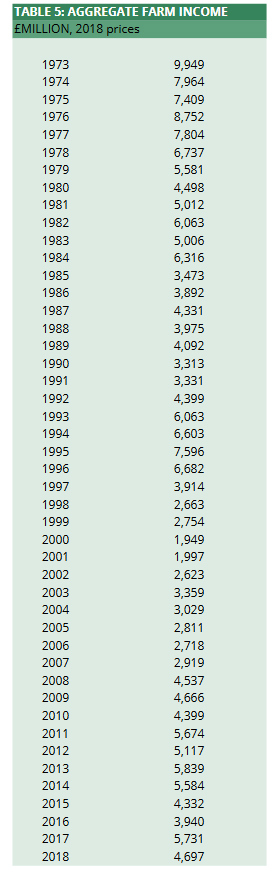
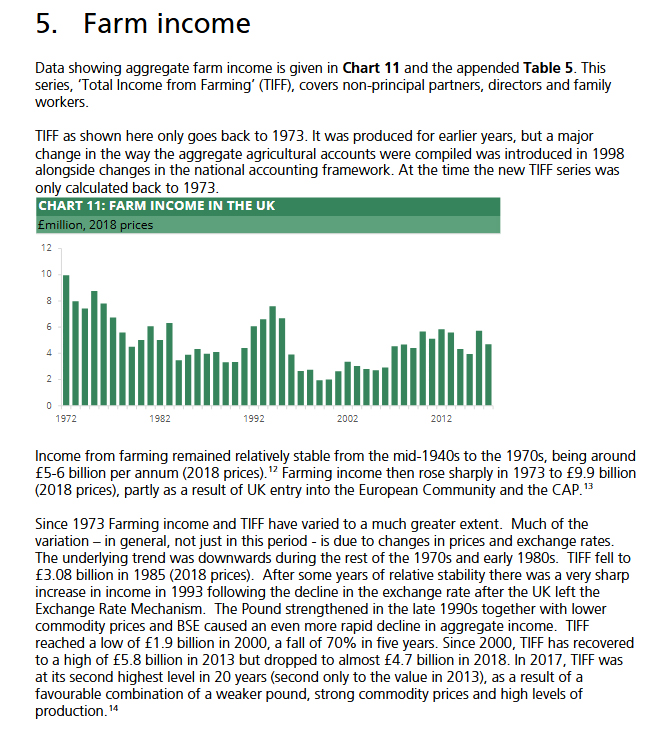
Now we come to statistics and I will be very brief but here are the takeaway points, well only one point, UK agriculture/ horticultural field crops production acreage has decreased, farm income is stagnant and imports have increased. Here is the link, a little more complex and not up to date. https://researchbriefings.files.parliament.uk/documents/SN03339/SN03339.pdf The cynic in me wonders why none of this information is in the same format and up to date, perhaps to hide the abysmal facts from the general public by successive governments of different colours
Now for my take on this mess, and I unashamedly call it a mess. The Agricultural economy has been neglected since the industrial revolution with brief periods of interest on the part of various governments. In recent times the second world war brought renewed interest because the UK was about to be starved into submission and we had the Dig for Victory campaign. The Land Army name shows how important self sufficiency was to the UK. This “encouragement” carried on until the early 1970s with various efficiency grants and other means to increase and improve agricultural production. The UK at this time led the world in modern agricultural production and then we joined the EU with its wine, beef, butter and god knows what mountains. The government sacrificed UK agriculture to join the EU and the decline started from this point.
Now to come to the the Minette Batters document, which in my opinion is another establishment fudge. We must ask firstly what do we want from Agriculture in the UK.
1 The most obvious Food and Ornamentals at a reasonable price.
2 A beautiful Countryside to be enjoyed by all.
3 Safety in the fact that we need enough food Grown in the UK and not be reliant on external sources (foreign) for our food.
Very simple requirements for the UK and its people. I will address each one it turn.
1
It is obvious to most country people who are in food production that the Supermarkets are the biggest destroyer of agricultural businesses with their virtual monopoly of buying power. All agricultural businesses, and I include everything here from wheat, to dairy, to eggs, to milk, to meat and ornamentals from cut flowers, nursery stock orchards and fruit farms to bedding plants. The trust system is broken with the main goal of the supermarkets to make as much profit for their companies and to Hell with producers except to keep them going to supply them, in other words serfdom. As an aside serfs were defined in the feudal system by William when he invaded in 1066, another imposition by Europe.
I once was talking at an agricultural meeting in Cardiff with the Welsh government about the supermarkets and their non-existent buying ethics and was asked a question. How many people does Tesco employ in Wales and I said “lots” and the government minister said “you have answered the question”. Governments are in the hands of the supermarkets. The establishment organisations such as the NFU are equally complicit in their support of supermarkets. It is the National Farmers Union as in “Union” such as the train drivers Union. So when are they going to threaten a strike if supermarkets do not pay a fair price for items such as milk to their workers (farms). Throw in the words milk overproduction or milk mountain or milk quotas , does that ring a bell as in when we joined the EU. Now we have trade agreements with the EU, Australia, New Zealand and whoever else who will supply if UK farmers do not at a lower price (now see supermarkets above), and the government will encourage it because it is “of National interest”.
3
(No 1 runs in to No3) This is a contradiction how can you have food security if we rely in imports with countries with political uncertanty and lets face it should we trust the EU and the USA, both have shown that they will protect home markets in front of the UK. Where is the food security when we rely on imports from other countries, (see Land Army and the UK above). The only true security is for the UK to produce enough food to feed its ever growing population from its own acreage. I will say at this point not the Oranges, Dragon fruit, Coconuts, Bananas, Lychee etc which we have to import but the basics, Apples, Blueberries, Potatoes, Carrots and Brassica and of course the Cereals and I will add the animal products fed on UK grassland and the Fish from the Sea. The ones we do not grow we can exchange by that dirty word Exports.
2
A beautiful countryside. Can we have the above 1 and 3 with reference to production and food security and my answer is YES. The UK is a product of millennia of hard work by countless people earning a living from the country soil. I do not think that there is any part of the UK which has not seen an input from man and yes I include the high mountains and the moors of Scotland. We do however have to change the complete outlook of the people and even more the hardest part of all, the government.
We seem to have a very vocal group of people who seem to think National Parks and “rewilding” are the answer and I can see the dismal results. I also have seen the damage of intensive farming caused by farmers and estates trying to make as much money as possible from a limited area of land. The true farmer is one who respects the land and loves his land and who tries to make a living from the land hand in hand with nature. Control and the environmental schemes which we have in place are not the answer. Notice the word Environment which was introduced into the Farming Department in June 2001 DEFRA (Department of Environment, Food and Rural Affairs). Here we have farming being demoted by yet another Labour government, with Environment and Rural Affairs in conjunction. being of more importance.
I now draw your attention to words written by far more educated people than me “environmental projects still depend on profitable farms”, “environmental income should support food production, not replace it”. We have followed the EU system of environmental grants and money for environmental practises as well as setting up or expanding National Parks ourselves but from my point of view none works as they should. No system is perfect and I understand that, but lets face it, the present ones does not work, the only people who benefit are the supermarkets, certain farmers, a vast number of people employed by environmental organisations and diversity projects.
At this point do not get me into the quagmire of “Carbon offsetting”, “Green products” “Recyclable” and “Sustainable” they just make the middle classes in the UK feel they have done their bit for the environment by planting a tree etc. I would say 95% of these projects are green washing and yes I have had experience of this and know more that I really want to.
Do not think that I am against environmental projects, I was a Green Environmentalist before Ed Milliband was born but I am foremost a lover of this country and a realist who I thinks that this country should be a living thing treasuring the past while embracing the future for unborn generations. Farmers have done this for millennia with only light government interference and farming is by its nature “English” (take that on board National Trust) so sits in a unique position in the UK. Any Minister appointed to oversee Agriculture should have dirty finger nails i.e. has a background in actual agriculture and actually got his hands dirty in his career.

My points
1
The power of supermarkets needs to be controlled, a difficult choice, and it will inevitably cause an increase in the price of food, but realistically food has never been cheaper in proportion to income. This will encourage back the family farm and the loss of the ever increasing “factory farms” so decried by the animal rights section who understand little about agriculture and the countryside, just more vocal and with a number of “influencers”. This reduction in power will take someone who understands the present system and has a passion for the UK countryside. This will also help create Food Security, and this person should have the power to do it. I am not an advocate of import taxes but in these circumstances a light touch to achieve this aim may be required. Remember that Food Security is imperative in today’s international climate and is part of the government responsibility and as I have said I would not trust the EU or the USA and because of BREXIT we have the power to become food secure.
We need to give your “dirty nails” farmers a voice which the government organisations and most of Minette Batters alphabet soup does not. A ground up reorganisation of the agricultural and countryside advice with the people having an important input. This in my opinion includes NFU, NT, N Parks, HTA and Uncle Tom Cobley and all and especially DEFRA. Yes alphabet soup but anyone in Agriculture knows who they are with Agriculture and the Farming Countryside being the base not just an add on for our political establishment. Our government is representative for all its voters and this includes farmers. We need a Ministry of Agriculture, Fisheries, Food and the Countryside. Remember NO FARMERS NO FOOD.
2
Educate the public as to the value of UK food in comparison with imported. This will mean a concerted effort across the board from cooking programs on the TV to “influencers” who seem to wield such power on the youngest generations. Soft influence but with an important result.
3 Bring back the Agricultural College as a stand alone organisation instead of being part of a “University” who are just chasing the biggest grant for research and offering degrees which are a pinnacle of education, rather than a qualification for someone who has turned up for the requisite number of lectures. Encourage the next generation to love the land with practical courses but also with meaningful degrees in Agriculture and Horticulture and not in Equestrian Studies or similar “fluff”.
4
Celebrate and encourage the entrepreneurs who create businesses and inventions rather than just supporting those which fit in with the criteria from the government department. Within this reduce the number of agricultural business advisors, or all business advisors, to a few who are able to sort the winners and have the power to actually push the project forward. The losers are inevitable but will be covered financially by the wages saved by reducing the number of overlapping advisors.
5
Put farmers in strong positions within the National Park governance and create living National Parks not the stagnant ones who are more concerned about a Mountain Pansy rather than having a vibrant National Park. Land management should be based on past practises with educated management to maintain the natural beauty. A National Park is created to preserve an area as best as possible at that point in time. It should not be “rewilded” or for it to become a Museum it should be to be a living landscape. The produce should be treasured and marketed as such – see item 2 above.
I am afraid I have moved away from the Minette Batters report but realistically her report is not a true document for the future of Agriculture in the UK it is an establishment whitewash.
My background is that I am someone who has an interest in History, Agriculture, Horticulture, Invention and the UK countryside and unfortunately dirty finger nails from growing things and messing about with machinery. I was brought up in the countryside and went to Agricultural College before we joined the EU and whose thesis on Automatic Tractor Control Systems in Horticulture is still valid today as it was in 1974.
A definition of serfdom “Serfdom was a coercive relationship between a landowner and peasant, which was widespread across medieval and early modern Europe. It features prominently in major historical debates, such as the origins of capitalism and the divergent pathways of western and eastern Europe to modernity. Scholars have paid particular attention to English serfdom, which is usually portrayed as highly oppressive and a major cause of the Peasants’ Revolt in 1381”.
Perhaps the time has come for the Peasants Revolt 2026
David Darrell,
Writtle 1971-1974
Living on the edge of a National Park in beautiful Shropshire. England UK.